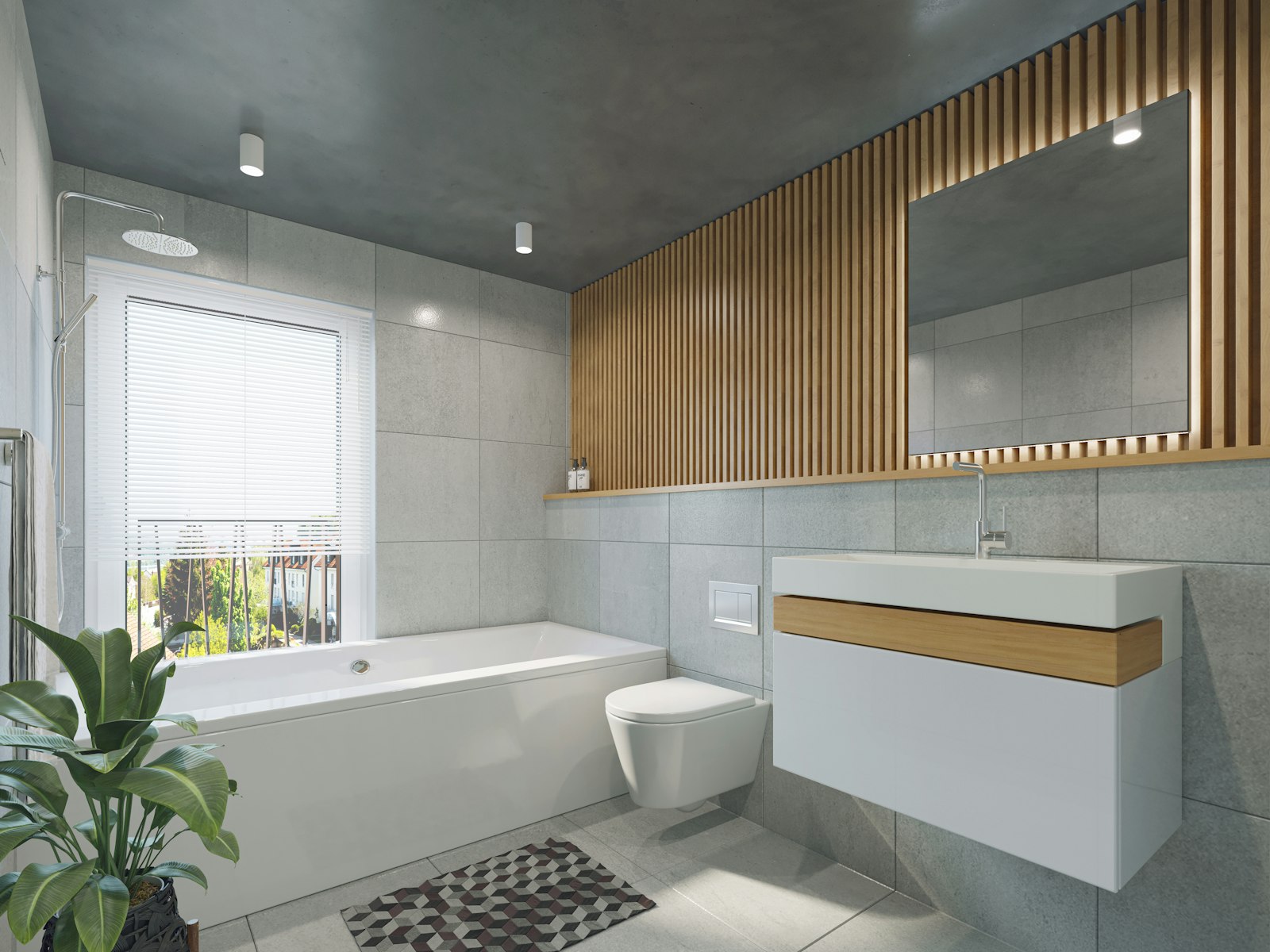
The right choice depends first on <strong>space, access and the floor</strong>, then on material and style. Acrylic is light and warm to the touch, enamelled steel is hard and easy to clean, and a freestanding bath needs lots of space and plumbing planned in advance. A full bath is heavy: have the structure checked.
The quick answer
Decide in this order: room and access, support, drain, then material and shape.
- <strong>Small room</strong>: built-in bath against the walls, or a compact size.
- <strong>Large room</strong>: freestanding or semi-freestanding, if the floor and plumbing allow.
- <strong>Light weight and thermal comfort</strong>: acrylic.
- <strong>Hard, scratch-resistant surface</strong>: enamelled steel.
- <strong>Timber or old floor</strong>: work out the load and have the structure checked before buying.
Materials: what can be said
The properties below are general. They vary by manufacturer, thickness and finish. The model's data sheet always takes precedence.
- <strong>Acrylic</strong>: thermoformed sheet, usually reinforced on the back. Light, fairly warm to the touch, a very wide range of shapes. Sensitive to abrasive products.
- <strong>Enamelled steel</strong>: steel sheet coated with enamel. Hard surface, easy to clean. Colder to the touch and noisier when filling, unless insulated. A heavy impact can chip the enamel.
- <strong>Enamelled cast iron</strong>: very heavy, good thermal inertia. The support and delivery route must be checked.
- <strong>Solid surface or resin composite</strong>: soft to the touch, often chosen for freestanding baths. Generally heavier than acrylic. Repair options depend on the manufacturer.
Size, measuring and access route
A bath is rigid: it must get through everywhere, not just fit in the room. Measure the full route before ordering.
Always compare outer dimensions (footprint) and inner dimensions (usable length and depth). Two baths of the same length can offer very different comfort.
- Available length and width between finished walls, tiles included.
- Front door, hallway, stair turns, bathroom door.
- Space to get in, get out and move around, door swing included.
- Rim height, especially for older people or reduced mobility.
Freestanding, built-in or corner
The type of installation changes the space needed, the plumbing and the upkeep.
- <strong>Built-in</strong>: between two or three walls, with a panel or surround. The most space-efficient option.
- <strong>Freestanding</strong>: placed on its own. It needs space all round, with suitable water supply and drain. Cleaning around it is easier.
- <strong>Semi-freestanding</strong>: one side against the wall. A good compromise between looks and practicality.
- <strong>Corner</strong>: fills a corner. Check the real volume and access to the taps.
Weight, floor and hot water
Water weighs about 1 kg per litre. For example, 200 litres of water is 200 kg, plus the bath and the bather. This load is concentrated on a small area, especially with a bath on feet.
On a timber floor, a lightweight floor or an old screed, have the structure checked by a professional, especially for cast iron, solid surface or a large freestanding bath. Buildwise (WTCB) publications on shower trays and sanitary fittings stress the strength and flatness of the support.
The real water volume depends on shape, depth and overflow level. Compare it with the capacity and flow of your hot water supply: a large volume can exceed a small water heater.
Drain, taps, fall and trap
The waste can be at the foot end, in the centre or at the tap end, depending on the model. It must match the existing outlet, otherwise the plumbing has to be altered. The EN 232 standard defines the connecting dimensions of baths, whatever the material, to ensure compatibility with waste fittings.
Waste water must drain with a steady, continuous fall, a value to be confirmed with the installer. The trap holds a water seal that blocks odours: it must remain accessible for cleaning.
- Locate the drain in the floor or wall before choosing a model.
- Rim-mounted, wall-mounted or floor-standing mixer: check the model is drilled accordingly.
- A floor-standing mixer needs supply pipes coming through the floor, to be planned early.
- Provide an access hatch for the trap.
Common mistakes
- Not checking that the bath passes through the door and stairs.
- Forgetting the weight of the water on a light floor.
- Choosing a freestanding bath without circulation space or suitable plumbing.
- Not comparing the waste position with the existing outlet.
- Underestimating the hot water needed.
- Neglecting the perimeter sealant and access to the trap.
What to check before buying
Read the data sheet and ask the seller for any missing information.
- Outer and inner dimensions, depth, rim height.
- Empty weight and capacity in litres, with the measuring conditions stated.
- Position of the waste and overflow, type of waste fitting supplied or to be bought.
- Tap holes, or the need for a wall or floor mixer.
- Conformity with the <em>EN 14516</em> and <em>EN 232</em> standards.
- Care: mild product, non-abrasive cloth, no solvents; follow the manufacturer's instructions.
Frequently asked questions
Acrylic or enamelled steel: which to choose?
Acrylic is lighter and warmer to the touch, with more shapes. Enamelled steel is harder and easy to clean, but colder and noisier. Compare the data sheets.
How much does a full bath weigh?
Water weighs about 1 kg per litre. Add the weight of the bath and the person. Have the floor checked if in doubt.
Does a freestanding bath need special plumbing?
Often yes. The drain and water supply, especially with a floor-standing mixer, must be planned before installation.
How do I measure to be sure the bath will fit?
Measure the room, then the whole route: doors, hallways, stairs, turns. Compare with the packaging and bath dimensions.
Is my water heater enough for a bath?
Compare the model's water volume with the capacity and flow of your hot water supply. Have the installation assessed if needed.